Tag Archives: Daily update for my twin boys
Daily update for my Boys 22 Feb 2014



Good afternoon little men!
How are my little ones doing this lovely Saturday afternoon ? I hope fantastic and full of smiles….
We had a power cut yesterday just after I did your daily update until about 4 am this morning, the joys of massive storms in Africa, Ouma and I had to get the candles out , felt like a camping trip , I think you two would have loved it! Oupa had to get the little gas stove out for Coffee for them. I must say the world feels clean and bright again this morning. It looks like we might get yet another storm tonight so am looking forward to that.
I think all the stuff is ready for next week, I have provided a select number of people full access to your blog also now should Judge Singleton decide to send me to jail for sharing your story and the facts on this case , so don’t despair your blog will keep going daily with updates if I am not able to do it myself anymore that I have ensured. All the Court documents etc. will also be released on here if need be to ensure that you both know the truth no matter what happens !
I emailed your school again with the police update received from Chester PPU to ask what they have to say now about the delusional claims of your care giver and her spokesperson, as thought they have not responded , thus we will have to file for the removal notice for you both from this school on Monday to ensure that you both are placed in a school that is approved by myself and your care giver and a school that will honour my rights also and not just the fantasies of your care giver , least they now know she is a drunk and addicted to pain killers as I am sure she has neglected to share that little bit of information with them the past couple of months…..I have also mailed them the PAS child abuse guidelines so that they are aware what your care giver is doing is classed as child abuse even in the UK.
I am still just really sorry that you both are being used by your care giver and her drunk spokesperson to get their kicks and to help them fuel their drunken delusional fantasies, like I told your school yesterday I think they watch to much CSI when they are smashed as your cousin says….I can only hope at some point people start seeing these people for what they really are …child abusers and drunks ……
Not sure what you two muppets have been doing today but I hope you are safe , fed , warm and happy …….I am not sure this is the case ,of what I am being told but let’s just hope what the family friends are telling me is wrong…. Very wrong ……
I hope you both liked the picture of the doggy trying to wake people , I guess that is what B&B will do with you both if they are not chained up outside in the rain as I know your care giver and spokesperson will do with little puppies that might cause a mess!…..
Not sure what time I will be writing after today little men , but I will try and do so whenever I can……
Just want to wish you both a nice fun , safe and happy Sunday ……
Can’t wait to see you both later under our big old green tree in dream land ….please bring extra double little O cuddles……
Night , night little men…..safe , warm , happy Sunday dreams…
Love you both very large trucks full and miss you much more ……
Love you little champs …..
Dad xx
Incarcerating Parents and Family Members – Why Our Jail-Happy Judges Are An Embarrassment
Does Jail time do family Courts any good? I will rather go to jail for life than stay silent one more day !
Judge of The Week: Mrs Justice Pauffley
Peace-in-The-Middle-East-Please ; Now joins the fold!
Well done world for speaking up…
These posts reminded me of your care givers spokesperson little men xx



The must read for 2014…..lol
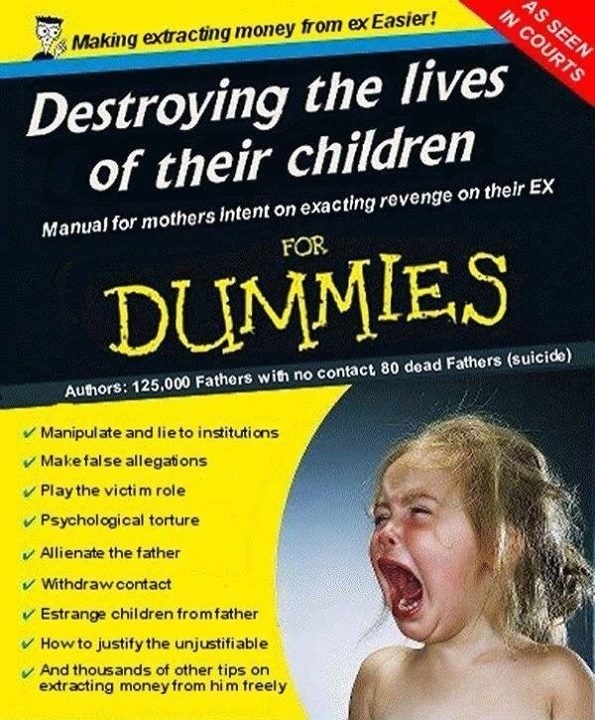
Sample PAS case and Family law in the UK
Confessions of an Expert Witness in the case of PAS
(Dealing with difficult scenarios)
Ludwig.F. Lowenstein Ph.D
Southern England Psychological Services
2013
Abstract & Summary
This article describes the difficulties an expert witness for the family courts has experienced when advocating the removal of an alienated child from the influence of the alienator.
It must be said advocating the removal of a child from an alienating custodial parent should only be countenanced when:
1) parental alienation had definitely taken place;
2) when the alienated parent fails to accept the court orders and states the child refuses good contact;
3) when efforts have been made to use therapy to change the position of the child of not wishing contact with the alienated parent.
The Judiciary will tend to make a decision with which the current expert may not agree and they fail to consider the effects of PA in later adult life.
Introduction
Sometimes my conscience pricks me. This is especially the case when my certainty in the conclusions I reach, are both fair and well-founded but nevertheless tinged with some uncertainty and concern. I then ask myself, as I am certain other expert witnesses must do: “Have I indeed come to the right conclusion or decision reached?” These conclusions, of course, may or may not influence the Judiciary. The Judiciary makes the ultimate and final decisions in any case. Having reached the age of 85, I tell myself, I have hopefully gained enough wisdom and skill to be relatively certain that what I conclude in a particularly complex case is both right, just and to the best of my ability honest and true. It is my position that I consider first and foremost what is in the long and short term interest of the child/children.
Let me explain what I am getting at by exemplifying what I have already said via a complex and relatively rare case in which I have been involved with in the family court. As one who has worked in this field many, many years it is frequently the decision of courts and solicitors to select me as the expert witness due to my long period of experience.
The case
Needless to say in presenting this case and the dilemma, rather than the doubts I experienced, the case will be suitably disguised in order not to be identified by anyone. This is only right to do, as the actual case is ongoing at the time of the writing of this article. It will be a confession by one expert witness, namely myself, who is attempting to do the very best he can to solve difficult demands by opposing factions. I am hoping that by putting pen to paper, matters will become clearer and the reader can share with me my concerns.
The decision I reach can also be judged by the reader, who may or may not agree ultimately with my conclusions and my decisions reached in an actual Family Court. My recollection after giving evidence was that the Judge seemed less than happy with my stance in this case and therefore might or might not follow my advice, unless, as already stated, other expert witnesses agree with me. The reader of this confession may or may not agree with what I myself decided right or wrong as being the correct course of action.
We enter the courtroom
I realise, that as I reached my decision that I too am only mortal and do not necessarily possess all the wisdoms of a Solomon! Now let us enter the courtroom together where the drama takes place. Before doing so, let me tell you of my decision reached and later the basis of my decision. It was my conclusion that a 10 year old boy should be removed from the custody of his mother and given to the custody of his father’s care.
The boy had been convinced by his mother that his father was “the devil incarnate”. The influence of the mother had been that the father should not have any contact with him, despite a court order having decided otherwise. Mother, due to her own implacable hostility towards her former partner wished totally to obliterate the father and to also obliterate the positive and happy memories which the boy had about his father, and which appeared to have existed in the boy’s mind before the parent’s relationship ended. On the whole the mother was successful in turning the boy against his father.
The success of this was borne out by the fact that despite, earlier court decisions that the father should have regular contact, the boy steadfastly refused to see his father. Now let us move into the courtroom itself. Here I gave evidence based on my own investigation of the father, the mother and the child.
My investigation and its results
It was on the basis of truly factual evidence that I wished to base my conclusions and opinions leading to recommendations to the court. My earlier report and recommendations to the court which was based on my earlier investigation of all the clients involved.
I will now share with you what took place in court. Incidentally, another expert witness of the same status as myself agreed with my own findings, that the child had been alienated against the father. This expert witness however, did not go so far as to recommend the removal of the child from the mother and placing that child with the father. The reader is being put in the position of being virtually a jury judging the rightness of wrongness of my own conclusions reached. It is quite possible that your views will differ from my own and I respect your own stance whatever it may be.
As someone who analyses the personality of people in great depth I use a number of approaches. These are: 1) I study the background history and views expressed by the protagonists, that is the father, the mother, and the child; 2) the views of other individuals involved such as Social Workers and other professionals; 3) members of both sides of the family involved in the case; 4) my own interview of the individuals in conflict, these being father, mother and the child; 5) psychological tests that are in the main objective measures of personality, but also projective techniques.
Needless to say, those approaches frequently do not show agreement. Parents and members of their family are likely to take sides. The sides taken are generally based on a biased view which favours one side or the other. Professionals can also differ in their opinion reached based on bias, prejudice etc. My own interviews are also open to the potential for wrong information being presented.
Those interviewed by myself can be expected to have a point of view which frequently is biased and sometimes blatantly dishonest. It must be said that another expert witness agreed with me, as already stated, that the mother had turned the child against the father by what is commonly termed “parental alienation”. It must be admitted that being a Psychologist rather than a Psychiatrist or any other professional, I rely mostly on psychological tests to help me find an appropriate view and solution. These tests are not necessarily foolproof but appear to me to be more valid and reliable than the other 4 approaches delineated. I personally have more faith in objective measures and to some degree projective techniques, especially when the tests have a ‘validity score’ or what is commonly termed a’ lie score’. A high lie score occurs when an individual is seeking to present him/herself in the most perfect social light which is unlikely to be valid. The high lie score also occurs when the individual presents him/herself with less negative traits than is generally found in the population of “normal” individuals.
What most of us have come to realise, is that we are imperfect creatures with, in some cases, many, but in most cases some, failings in our personality as reflected in our behaviour. We must accept that very few people are perfect, always just, or honest etc. and that most of us mortals posses both good and less desirable attributes.
Having deviated briefly from presenting my analysis of protagonists, in the family courts, (the mother, father and child) I now briefly describe the individuals concerned concentrating on their personality assessment based on psychological tests or inventories.
The personality of child, mother, and father as assessed by one expert witness
The child
Let me start with the child. Let us call him John. John was adamant that he wanted nothing to do with his father. He entered the testing room committed to that phrase as if he had learned it by heart or it had been inculcated by someone in his mind. He described his mother in the most glowing or virtuous terms. Mother had been the only one in his life. She alone loved him and cared for him, and he had reciprocated this love and care. She was his main protector and it was his mother’s advice which he tended to follow, rather than that of his father.
When he described his father, the very opposite picture emerged. His father was described as violent and abusive verbally and physically, untrustworthy and someone who did not love him or care for him. The boy confessed that for many reasons, he did not want anything to do with his father. He did not even wish to have telephone conversations with him. He did not wish to meet his father even under supervised conditions where he would feel safe in his father’s presence. He described his father as someone towards whom he had never been close or towards whom he felt neither affection or love. He agreed with his mother totally that his father had nothing to offer him. John claimed that he had never enjoyed his father’s company before his father and mother parted and had even less desire to meet and be with his father now that father had left the home. He described the frequent verbal arguments between his parents as painful and he always sided with his mother. Father was always viewed as being wrong.
Mother had found another partner very soon after father had left and mother encouraged John to consider this new man as his father. It was therefore not surprising that when John was asked to draw a picture of himself and his family doing something that his natural father was totally absent in the picture drawn. Instead, he drew himself first and then his mother close beside him and “his new father” beside his mother.
On the Sentence Completion Test there was more evidence provided by John about the closeness to his mother and an abhorrence he felt towards his father, whom John described as “bad in every way”. He spoke about his ‘new father’ in the most positive of terms. He was described as kind, fun to be with, and caring. John appeared now to be happy with his family in every way especially if he was not forced to see his natural father who, as previously stated, he appeared to detest.
The mother
The assessment of the mother using psychological testing revealed that she was a strong-willed and forceful personality. She was totally in control of the home and had been for many years and of course very close to John and the new man in her life. This man she described in the most glowing of terms. He was everything her former husband was not. He was kind, agreeable, never aggressive verbally or otherwise, and they got on well together, as did John with his new father. John also appeared to like this new man, something he claimed he had never felt towards his natural father.
On the personality testing it was noted that she had a high lie score and appeared to be of a very forceful personality. She had a high psychoticism score compared with other women of her age. She had strong views of right versus wrong and was certain that her son was now better off with his new father and the avoidance of contact with his natural father. Although, the court in an earlier decision decided that the father should have regular contact with John, mother stated that she tried to follow the instructions of the court but could not get John to go to his father. She staunchly claimed that she “encouraged” John to meet with his natural father but John had refused on his own initiative to do so and she could not and would not force John to see his father, if he did not wish to do so.
Mother described the natural father as verbally aggressive but not physically aggressive toward her. He had slapped the boy on two occasions but mother would not elaborate why father did this. She described the slaps as “unnecessary” and ‘”over the top” behaviour and disagreed with this kind of admonishment. She described the natural father as unfeeling and only wishing to see John to try and turn the boy against herself. In this she claimed the natural father was totally unsuccessful when he did have contact in the past. Mother claimed that she felt John had nothing to gain by having any contact with his natural father and much to lose in being “with that man”.
Father
The interview with the natural father demonstrated a totally different scenario. Father claimed that he had loved and would always love his son. This was despite John’s reluctance now to have any contact with him. Father claimed that his former wife had demonised him to John. Father claimed that he and his son had in the past a warm, loving, as well as fun loving relationship. Unfortunately father had to be away in the past on business from time to time and he was consequently not always home to interact with his son. When he was there he tried to make up for his time away by being closely involved with him. He and John both supported the same football team and had attended games together, often without the mother who did not like football. During holidays, he swam with his father and went out in a boat to go fishing and shared many mutually enjoyable activities.
Father described his former partner and wife as a devoted mother. It was a description in the very opposite terms in which he was described by his former wife. She was, however, also described as highly opinionated, controlling and intolerant. Father described her as wanting total control over John and himself and the home. It was for the latter reason and the frequent verbal arguments that ensued that he felt the need to leave the matrimonial home. He felt the verbal quarrels were bad for John to witness.
He admitted readily to having slapped his son twice for bad behaviour and once because of being disrespectful towards his mother! This reason, as will be remembered, mother failed to reveal. Father stated that mother never corrected John in whatever he did . The boy could do no wrong. Such a lack of chastisement created a child that was willful and sometimes insensitive towards other people. Mother totally doted on John and as far as she was concerned, John could do nothing which would require chastisement.
In other words mother and father differed totally in what they expected from John. Father stated that he was never violent or abusive towards his former wife but disliked her now but had never spoken badly about her to his son. His main reason for disliking her was that there was now no opportunity for him to have any contact or positive relationship with John, where previously John and his father had been close.
This was deeply hurtful to the father, who felt that he and his son had in the past been mutually close and deeply loved one another. Father suspected that the mother had over time totally turned John against his father and that this influence had impacted on John in his reluctance to have contact with him. Father could not believe that his son could not remember the good times they shared in the past and the love that was present between them.
On the personality testing the father had a low “lie score” indicating the fact that he was presenting himself as honestly as possible in the testing administered. He also had a relatively low forcefulness score. This indicated he was not an aggressive, authoritative or controlling personality. He suspected that his former partner spoke badly about him to their son and that over time John had been totally influenced, and even brainwashed, by this behaviour. This led to John rejecting and totally obliterating his father.
Father had never had the intention of removing or attempting to have total custody of John from his mother’s care but merely wanted to play some part in his life as the natural father. It saddened the father that John had adopted the views of the mother that the new man in mother’s life should now be regarded as the father figure in John’s life. The natural father felt this was both unfair and not in the short and long term interest of John.
The court room drama unfolds
As the expert witness in the case, I felt, based on the evidence, that father was entitled to good contact with his son and the rebuilding of their relationship to what it was in the past. I also felt that from all the evidence and most especially the personality testing that father was an innocent victim of the mother’s implacable antagonism and that she had alienated John totally against his own natural father. I felt that this had been motivated by the mother actively, yet also subtly, conspiring to create a child who loathed and rejected his own natural father. A second expert witness ( a psychologist) had come to the same conclusion.
In simple, but extreme words, mother had, and would continue to influence John against a good natural father until that father was totally rejected by a once loving son. I considered this to be a severe example of emotional and psychological abuse based on implacable hostility between the mother and her former husband. I felt that this was leveled at a vulnerable child to make that child believe that a once loving father had no value whatsoever in his life.
This brainwashing I felt was not in the best interest of John or any child. I also felt it was unjust and unfair that a good father should be deprived of interacting with a formerly loving child. In the meantime it had to be acknowledged, that despite the mother’s insidious behaviour, father yet spoke well of the mother. This was despite the fact that the mother had contrived to have the natural father replaced by another man. John was to regard the mother’s new choice of a partner as the new father.
A Barrister’s criticism of the expert witness
I was attacked vehemently in court by the Barrister representing the mother. This was a natural consequence of the judicial “adversarial” approach. Unlike expert witnesses, Barristers and Solicitors are not independent. They will side and act only on behalf of their client. The attack from the Barrister came as a result of my opinion given in my earlier conclusion, that the child needed to be removed from the mother and placed with the father. My earlier report to the court and my testimony in the court were the same. A change of residence was needed. I decided that mother should lose custody of John unless she immediately cooperated with the Court’s ruling that she ensured that John had good, positive, and regular contact with his father. Failure in good contact should result in father gaining immediate custody of John. The expert witness made it clear that the excuse given by mother was invalid. The boy’s refusal to see his father was due to her alienation. The fact that she would not force him to see his father was due totally to her hostility towards the natural father. The expert witness made it clear that there had been a good relationship between the father and the son in the past and that mother had gradually demolished this through the process of alienation. She needed to undo this, and she would only be successful in this if she truly and sincerely encouraged positive and good contact with the father, with no excuse being provided for the child not turning up in father’s company and responding appropriately.
The mother’s Barrister attacked the expert witness as an expert on the following issues: firstly I was asked in the court whether I was a “zealot” or a “fanatic” about my views. This is a normal ploy carried out by Barristers to make an expert witness look extreme and therefore as a hostile individual; secondly I was criticised for potentially harming a child by forcing that child to be removed from a loving mother and placed with a father who was detested by the child.
My response to these criticisms was as follows: 1) to the point of accusation made that I was a zealot, I stated
“ It depends what you mean by being a zealot. If you mean I am fanatical in believing that two good natural parents, and I mean “good”, should bring up a child and this is better than one doing so, yes I am as you say a zealot. I fully admit that it is an important principle of mine in which I believe that both parents have a right and responsibility to care for their child regardless of how they feel about one another. If that makes me a zealot, then indeed I am one. If you accept as I do that two natural parents should work together for responsibly brining up a child, rather than one who is attempting to turn the child against a former loving parent, yes then I am a zealot. I further believe that an alienating parent who speaks badly about the other parent is in fact an emotional abuser. If you agree with me on this point, then you too are a potential zealot! If you believe as I do, that two caring parents, whether together or apart, have a responsibility to be involved with a child and guide that child together then you are as much of a zealot as I am.
As you must know one can be a zealot which is to the benefit of others including a child. You can call an individual a zealot by doing what is in the best interest of that child rather than doing what is wrong and abusive toward that child. I believe that a parent turning a child against the other good parent is ”evil” and not in the best interest of the child. It should equally not be in the best interest of the alienator to continue to do such alienating. It is equally unfair and unjust to the alienated parent to be deprived of caring for a child with whom he had a good relationship in the past.
It is for this reason that I believe that drastic action needs to be taken in this case and that is to remove the chance of the harm that has already been done resulting in the child not wishing to have any contact with a loving father. Hence, if in the next month the alienating parent can make certain John has good contact with his father then there is no need for John to be taken or removed from the mother’s care, and place into the custody of the father.
If the mother however, fails to cooperate, then the removal of John is imperative and highly necessary. The mother will however claim that she cannot force John to be with his father. Such a claim or view must be discounted. The clinching argument is that if John was meant to have a dental appointment or the need to go into hospital, he would undoubtedly be forced to go because mother would insist on this for his own good. She could equally insist that John must see his father, since this was also for his own good. He must see his father not only for pure contact but to enjoy that relationship with his father while he is with him.
John’s relationship with his mother is such that John would do anything that she asked him to do. It is therefore up to her, who has caused the father to be alienated, to now reverse her policy. She needed now to speak well of the father, something she has failed to do in the past, and change John’s attitude and behaviour towards his father.
Father should be able to continue playing a part in John’s life. Otherwise there needs to be a change in residence and transferring of John into father’s care. This is not my preferred option, but it is the only option remaining which allows the father eventually to reengage with his son and put right the harm that has been done by the mother’s abusing of the father to the child. In this way the damage that has been done may ultimately be undone.”
I was surprised and pleased that the Judge allowed me to continue as long as I was able to do so to argue my case. I remembered that I was independent and this was vital in this situation but independent expert witness after gathering evidence are able to provide factual evidence and opinions based on such independence. The Barrister representing the mother, however, had not finished. His next argument was more difficult to refute. It was: “Are you not aware of the harm you are doing in advocating the removal of the child from the close relationship he has with his mother and placing him with the father? Are you not aware of the emotional distress you are causing the child by removing that child from the mother’s care and placing John with a father he hates? Isn’t such emotional damage irredeemable and should it not be avoided. Should it not be best for John to remain with his mother whatever occurs? Would it not be better to wait for John himself to seek out his father when he is older?” (It has been well established and it is important to deviate that children rarely, if ever, seek for their natural parent after many years of absence.)
My reply to this was that the Judge allowed me time to provide the following argument. My reply was as follows:
“I agree that the course of action I have advocated and deemed necessary has its immediate but only short term negative repercussions, if indeed it has even that. I nevertheless, believe that it will be of ultimate value in the long term for this boy to have a renewed relationship, which is positive, with his natural father which he enjoyed in the past. Initially, as you have said, such a change of custody is likely to cause distress to the child. The mother however, is responsible, and not the father, for this distress. She should have, but did not, encourage good contact between John and his father when she should have done this.
Failure to remove John from the continuing pathological influence of mother, is necessary so the harm that has been done by the mother can be reversed. This can only be reversed by John and his father reengaging and the mother being admonished by the court for alienating John against his natural father. Mother doing what she has done, has created the injustice to the child and to the father. Such injustice needs to be reversed. For the time being, while John is with the father the mother should have no contact whatsoever with the boy. When John has once more reengaged with his father and they have developed a good relationship, as was the case in the past, then there is a possibility that mother can play a part in John’s life once again.
Mother must however, give an assurance that should John be returned to her eventually she will desist from any further alienation, and that she will abide by the court’s decision on that point. Both parents need to abide by the court’s rulings without fail and no excuses will be accepted by the court. Furthermore, infringement by either party should result with the child being placed with that parent who has complied with the court’s decision and agreed that John should have good contact and a good relationship with both parents. Parents who readily abide by the court decision should be rewarded by having custody of the child, and the reverse is equally the case.”
The Barrister for the mother continued in the attack of the expert and his view that John needed to be separated from his mother for a time, or permanently, if she continues with her process of alienating John against the father – “What evidence do you have that the removal of John and being placed with the father does not produce serious, long term emotional distress for John?” My reply was as follows:
“Due to the fact that many Judges fail to alter a child’s residence research has not been done to verify that the long term effect of removing a child from the alienator to the alienated parent is not harmful. There is however, fairly conclusive evidence, that leaving a child with the alienator has very many negative immediate and even more long term affects on the child and later adult [1]. This view is based on research which so far suggests that the long term affects of not changing custody of a child lead to the long term absence of that child having any contact with the alienated parent. It also leads to future psychological problems and even suicide in later life.
There is another factor to be considered. What is the long term view of the court if it is not to see that justice prevails. Putting right the injustices which have been done in keeping John from having a continued good relationship with a loving father is clearly wrong, if not criminal. Would one consider allowing a thief who has stolen objects from another person to avoid being punished for committing theft? Why therefore should it be beyond the law to ignore and fail to punish the alienator who has diminished and eliminated a good parent? The innocent parent does not deserve this. The innocent child deserves to have the love of both parents and that includes the absent alienated parent. Is this not also in the best interest of any child? The court must agree with this important point and be ready to act firmly and decisively in removing John from the abusive influence of a relentless and heartless alienator. It means placing him for an unspecified time with his father who has been a victim of alienation. Only in this way can the damage which has been done by the alienating parent be rectified.
For this to occur the court needs to take seriously the views expressed by the present expert witness and indeed another expert witness who independently arrived at the same diagnosis. Failure to do so is to accept the ‘status quo’ and leave John where he is with the repercussions which such a course of action would follow. It is, as always, for the Judiciary to decide what in their view is the desired, correct and just course of action.”
Before the final verdict
Before the final verdict was rendered by the Judge the Judge asked the expert witness some questions.
Judge: “Do you not agree that a period of therapy with John and perhaps also including his mother could alter the picture so that John was more willing to engage with his father.”
Expert Witness: “I do not believe such a therapy would be effective even though you may wish to try it. If therapy is available, and I believe there is some limitation here, I would suggest the following and my reasons for it:
1) Some form of therapy has already taken place but was unsuccessful with John shouting at the therapist and leaving the therapy room showing absolutely no respect for the therapist who was trying to get him to understand that good contact with his father was to his advantage.
2) My second reason is that we are dealing with a “folie a deux” situation. John is
entirely entwined with his mother psychologically and shows the same implacable hostility towards the father that mother does. Until this is changed, John will neither engage with the therapist or with his father.
As it turned out by the end of the court case no therapist was found.
Final decision
As of the completion of this article no decision was reached by the Judge. The reader therefore should be the one making his/her own determination or decision. It was clear to the expert witness in the case that the Judge was unlikely to adopt the view of what the expert witness advocated. It was most likely that the Judge did not favour the extreme view expressed by the expert witness on how the case should be resolved. The reader however, is left to make his/her own decisions, in theory at least. That decision is determined by whether the status quo is to be accepted and John will remain with his mother and thereby create limited problems in relation to his own emotional state. Should the father have to accept that he will have no further contact with his beloved son? Should the view of the expert witness be accepted or discounted?
It is clear from what has been stated that Judicial decisions in the final analysis are decided on subjective factors and most importantly the Judges’ orientation and subjective thinking.
Injustice prevails – a postscript
The author of this article was obviously interested in obtaining information as to how the court case over John continued, and its conclusions reached. Sad as it may be, the father reported that he was unlikely to have contact with John as the Judge decided, after hearing the evidence from Social Services and others, that the child’s view should prevail, this being that he did not want to have any contact with his father despite the fact that the two expert witnesses indicated clearly and without doubt, that John had been alienated against his father by the implacable hostile mother in this case. The expert witness encouraged the father to seek an appeal about this decision.
References
o Baker, A. J. L. (2005a). The long-term effects of parental alienation on adult children: A qualitative research study. American Journal of Family Therapy, 33(4), 289-302.
o Boch-Galhau, W. von (2002a). Parental alienation syndrome (PAS): Influence of separation and divorce on the adult life of the children. [French]. Synapse, Journal de Psychiatrie et Systeme Nerveux Central, 188, 23-34.
o Boch- Galau, W. von (2002b). The parental alienation syndrome (PAS): Impact of separation and divorce on children and on their adult life. [Spanish]. Revista Argentina de Clinica Psicologica., 11(2), 113-38.
o Boch-Galhau, W., von. (2003). Parental alienation syndrome – psychological consequences for adult children of divorce and for affected parents. [Gernman]. Interdisziplinare Fachzeitschrift Kindesmisshandlung und-vernachlassigung, 6(1/2), 66-97.
o Boch-Galhau, W. von (2013). Parental alienation and parental alienation syndrome/disorder. Postfach, Berlin: Verlag fur Wissenchaft und Bildung.
o Franz, M., Lieberz, K., Schmitz, N., & Schepank, H. (1999). When there is no father. Epidemiological findings on the significance of absent fathers in early life for mental health in later life. [German]. Zeitschrift fuuuur Psychosomatische Medizin und Psychoanalyse, 45, 260-78.
o Kopetski, L., & Rand, D. (2005). The spectrum, of parental alienation syndrome (Part III): The Kopetski follow-up study. American Journal of Forensic Psychology, 23(1), 15-43.
o Lowenstein, L. F. (2005). Part III- long term reaction as a result of parental alienation. Article, http://www.parental-alienation.info
o Lowenstein, L. F. (2010). The effects on children in the future who have been successfully alienated against a parent. Article, http://www.parental-alienation.info
o Lowenstein, L. F. (2013). Confessions of an expert witness in the case of PAS (dealing with difficult scenarios). Article, http://www.parental-alienation.info
Dr Ludwig…PAS
The Family Courts: What is an ideal Judgment?
(Dealing with difficult scenarios)
Ludwig.F. Lowenstein Ph.D
Southern England Psychological Services
2013
Abstract & Summary
This article attempts to probe deeply into scenarios where a child who had had a good relationship with a now absent parent refuses to have good contact with that parent. This situation occurs due to the implacable hostility of one or both parents towards one another following divorce and separation. Why custodial parents behave as they do is explained. Its effect on the child is also delineated. In some cases a parent, for a variety of reasons, has had a poor or pathological relationship with the child, and such a parent should not be in contact with the children. However, if there has been a good relationship with the parent, further contact with the child should occur. Why it does not take place is discussed. The view of one expert witness is expressed and how this view may influence the Judiciary.
Introduction
I am frequently engaged with being an Expert Witness in the Courts dealing with families as I would term it “in turmoil”. I always hope as a result of my assessment of the various individuals involved, the children and the adults, that an ideal solution can be found following the break-up of a marriage or relationship. Such break-ups involve conflict which results from the implacable hostility between the parents.
My main concerns always, are the children involved, but followed closely behind the welfare of the two natural parents who have created these children. The main problem appears to be contact disputes between the two parents in relation to the children and who they are with, or when and how frequently, or not at all! The main difficulty appears to be when there is an acrimonious relationship between the parents which is usually exacerbated by separating or divorcing and the hostility which ensues and has probably been present in the past. This impinges on the emotional security of the children. The children, if not before, certainly following, the parting of the parents are aware of the hostility which exists between the parents and this is of great concern to children.
One of my articles published recently in the Expert Witness Institute Newsletter, Summer 2012, was on the subject of the “Important Parent Friendly Doctrine and the Judiciary (a response and solution to implacable hostility leading to parental alienation) “. This article presents two cases: one which ends in a harmonious relationship between the parents as they both accept this is in the ‘best interest of the children” that they work together to bring these children up in the best possible way; the second scenario concerns when this does not occur. The article that follows now is in a similar situation where the parents are at odds and suffer from implacable hostility on both sides or on one side only. This leads to problems with contact, or at least good contact, between children and the now absent parent.
Parents who have such problems with one another are increasing as divorce rates are increasing also. In these scenarios the parents are more concerned about expressing their hostility towards the other parent than being concerned with what is in the best interest of their children. I will now consider when it is unlikely that one of the parents should have contact with a child followed by when such a parent should have contact.
When should a parent not have contact with a particular child following divorces and separation?
There are cases where the children have had a poor relationship with the now absent parent and this has led to them not wishing any, or very little contact with the now nonresident parent. The source of the problem may have been that the child was physically, emotionally, or sexually abused or that he/she suffered from neglect and lack of appropriate parenting.
In these situations it is not likely to be of benefit to the child to have contact with such a parent and it may well be better for that parent not to play a role in the child’s life. Some parents who have had a poor relationship in the past with their children may be helped, through therapy, to improve in their attitude and behaviour towards the child/children in question. Other parents are unlikely to benefit. A parent who practices paedophile activities or is violent towards the child is unlikely to be of value to that child.
It is the role of the expert witness and others to attempt to identify such problems and in such instances it is probably best, at least immediately, for there to be as little contact as possible between that parent and the child unless it is supervised and unless the child him/herself wishes it. Eventually, there may be a rehabilitation of a parent who has failed the child in some way, and hopefully the child will respond to this in a favourable way, as should the custodial parent.
When should a child/children have contact with their absent parent?
It is the view of the current expert witness that children who have had a good relationship with a parent in the past, and there has been no abuse either physical, emotional, sexual or otherwise, good contact with that parent is of great value to the present and future of the child. This is of course sometimes opposed by the custodial parent, as already explained due to their hostility towards the now absent parent.
The good relationship which the child has experienced before the break-up of the marriage should be a guideline as to whether future contact will be of benefit to the child. When the child has been manipulated or influenced by the custodial parent to have as little contact as possible with the now absent parent, then the child him/herself may be in a conflict situation. They may well feel that having lost one parent following the break-up of the relationship between the parents, the child may also lose the current custodial parent. This sometimes leads to the child allying him/herself with the remaining parent and sharing to the views of that custodial parent. That means, essentially, that the child has lost the now absent parent, despite having had a good relationship with that parent in the past, and does not also wish to lose the care of the remaining parent.
Such manipulation by one parent, due to the animosity he/she feels towards the other parent, is frequently termed “parental alienation”. Many do not accept this particular term and I would prefer therefore to use the term “parental manipulation” based on implacable hostility towards and absent parent. Such alienating is most often carried out by the custodial parent, but could equally be exercised by the noncustodial parent.
The Judiciary and the expert witness
An expert witness is appointed via the Judiciary for the purpose of advising on what is the best course of action in relation to a child and contact with an absent parent. The expert witness must base the evidence that is presented to the Court on what is discovered about the child’s apparent wishes as well as the reason for those wishes. As already stated before many children refuse to have contact, or wish to have very little contact, something has happened with the absent parent. Despite a good relationship having existed in the past, due to the manipulation or influence of the custodial parent against the now absent parent a child often refuses contact with the nonresident parent. It is for the expert witness to present the reason why a child has decided to have little or no contact with the now absent parent in cases where there has been a good relationship between the child and that parent.
Expert witnesses, much as anyone else, despite the fact that they are “independent” have certain views about what they feel is an ideal solution to the problem of children who have been manipulated or alienated into not wishing to have contact with an absent parent. The current expert witness is no exception. It is the view of the current expert that it is in the best interest of children now and in the future to have two good loving, caring and guiding parents who are working together for the benefit of the child. The question is: “How can this be achieved?” especially when the child wishes to have no contact with the absent parent.
The Judiciary will frequently be aware of the different ages of the child/children involved in seeking to make a decision. It is frequently the Judiciary’s view that older children, say over the age of 10, have a will of their own and have a view of their own which must be taken into consideration. It is the expert witnesses’ role however to always present reasons why an older child does not wish contact with the once loved and now absent parent.
The Judiciary frequently seeks to change the view of children, whatever age, by providing them with therapy, since in the past that child has had a good relationship with the now absent parent. It is the role of the therapist to obtain the child’s support and interest in seeking eventually to have good contact with the now absent parent. This is not an easy matter!
Parents who manipulate children are in a very strong controlling position and have a great deal of influence which is difficult to oppose even through the best of therapy approaches. Psychologists and others are aware that children react to the influence that is upon them, and in some cases, this is a form of emotional abuse by the controlling custodial parent taking advantage of their position to strongly influence the child’s future behaviour. Seeking justice and fairness in what is in the best interest of a child is not an easy matter, and the Judiciary are frequently placed in a role of making decisions that are not always viewed as just, fair or right.
The child who states, whatever their age, that he/she does not wish to have any contact with the absent parent may well feel that it is in the best interest of the child to have no contact, or very little contact, with the now absent parent with whom they enjoyed an excellent relationship in the past. The question the Judiciary must ask itself is: “Is such a decision truly the best decision, considering the child has now been deprived more or less of a good parent due to the influence of the other parent?”
Once therapy has been used to seek to change the view of the child/children, and it has not succeeded, then a decision needs to be made as to whether some form of coercion should be involved. It is frequently clear to the Judiciary that if the custodial parent were to insist, and truly insist, that the child have good contact with their absent parent, such contact would in fact ensue. Frequently, a parent such as this, will claim to have made every possible effort to get the child to have contact with the absent parent but the child/children firmly refuse to do this.
This occurs when after a period of intensive manipulation or indoctrination has been successful and cannot be reversed easily. This is especially the case with older children. Many custodial parents are extremely shrewd in the way they pay “lip-service” to what the Court wishes to happen but then does everything possible for preventing it occurring i.e. good contact between the child and the now absent parent. How is the Judiciary to know whether in fact the parent has really made a sincere, definitive, and firm encouragement that the child should have contact with a now absent parent and that this contact should be most positive and constructive?
As already mentioned members of the Judiciary recommend some form of therapy for the child and possibly for the alienating parent. This is sometimes effective but more often or not it fails also, or no funding is available for such therapy to take place. It is the role of the expert witness to provide evidence to the Court as to why the child has failed to wish contact, or indeed why the custodial parent has failed to insist that such good contact take place.
Expert witnesses vary as to what they consider to be the next best step forward if indeed there is one. It is the view of the author that under such circumstances there may be a need for very definitive or firm reaction to make certain that all is being done to get the child to be in the presence and under the influence of the now absent parent. This may mean fining or otherwise punishing the parent who has indoctrinated the child against the absent parent. In some cases it will be necessary to remove the child and changing the residence of the child to a neutral centre such as a children’s home or to the absent parent. In this way the alienated parent can renew their relationship, which has been unjustly prevented by the action of the custodial parent.
On the whole the Judiciary is reluctant to use such draconian methods claiming that this is harmful to the child in question and the child’s emotional security. Rationalisation for such action is frequently that the child will or may in due course hopefully seek to make contact with the absent parent when that child is older or when he/she is no longer under total control and influence of the custodial and manipulating parent. Although this occurs from time to time it is not a certainty by any means. Many children lose permanent contact with the absent parent and sometimes the absent parent either moves away or indeed dies. Many absent parents also start new families and although they are ready to welcome the alienated child, if that child wishes to have contact with them, this again is an impediment to good contact with the child.
The long term effects on children who have been alienated are well documented. Many children develop educational, psychological, and behavioural problems and have difficulties in their relationship with others in the future. Many have learned bad habits such as lying and deception from the custodial parent and they will continue in this behaviour. Many are known to suffer in the future from psychological problems of various kinds including depression. This is frequently not considered by the Judiciary judging a current case although expert witnesses are fully aware of the strong possibility that children when older become maladjusted in various ways due to the experience of having been alienated from a good parent.
The Judiciary is often unable to find an ideal judgment and then take a realistic or pragmatic view of the situation by finding a solution which in their eyes which is least harmful, initially at least, to the child in question. Frequently, the Judiciary does not like to consider long term effects of children who have been separated from a good parent and are more concerned with the immediate situation and how to resolve the problem to their best ability. Perhaps the Judiciary hope that there will be no long term effects on a child who has been unfairly emotionally separated from a good and loving parent. This however, may be wishful thinking!
It is almost certain that once a child has had an opportunity of resuming contact with an absent parent, despite the period of alienation against that parent by the custodial parent, the good relationship can resume between that absent parent and that child and this is to the benefit of the child. It could also be considered a just and the right solution.
It is the view of the current psychologist and expert witness that any parent who manipulates a child against another parent is committing a form of emotional abuse which should be considered a good reason why that parent should not have custody of that child. Often if an emotionally insecure parent who has been alienating a child against another. They realise that they may well lose contact with or custody of the child. This fear may sometimes lead to the cooperation of the alienating parent by sincerely encouraging the child to have good contact with the absent parent. Sometimes warnings such as this, or threats are ineffective, in these circumstances it is probably best to remove that child from the environment where the emotional abuse is taking place. This, it is realised, is a drastic step which not many members of the Judiciary are willing to undertake. It has however, been tried and been found effective in many cases, and is ultimately in the best interest of a child now and in the long term.
It should be reiterated that the current psychologist believes in making every possible attempt to avoid having to utilize such drastic methods and that some form of therapy could well be of value, which could provide an opportunity for the child to have good contact eventually with the absent good parent. It is however, when this is ineffective that the current expert feels fairly firm and decisive action is necessary for the Judiciary to right the wrong that has been done to the child as well as to the absent parent
Ludwig F. Lowenstein
Southern England Psychological Services
Allington Manor, Allington Lane, Fair Oak, Eastleigh, Hampshire , SO50 7DE
Email: Ludwig.lowenstein@btinternet.com
Daily update for my Boys 21 Feb 2014


Hello little men!
Hope you two muppets are having a fun day at school with all your little friends , hope you are having lots of giggles and plenty of learning !
Talking about your school, your care giver emailed last night to say she had spoken to the police and I am not allowed to visit your school next week , I then emailed the police who has agreed with me as she does not have a court order to prevent me from coming to see the school , this is left to the school to decide , so in turn I have emailed the school to ask what risk I pose to the staff and other little ones if you are not at the school that day , as the delusional care giver must have fed them the same rubbish as what she is feeding Chester police who as normal seems to have realised she is a liar and totally mental by saying the thing she is with no evidence or fact but her drunk spokesperson confirming what she is telling people – nice people they are !
Can’t believe how dark it is here now already , looks like we are about to get a massive storm, it’s going to be nice as we have not had rain for a while now again , guess this might be the last rains before winter , I can see how much earlier it is getting darker each day now……
I need to pack tomorrow morning early as I have a long week of travel again before I get to the UK , I am still heart broken that I will not get to see you both next week , all thanks to your care giver and her spokesperson again as normal – remember little men PAS is child abuse , you need to phone child-line as soon as you can , maybe they will listen to you both as Cafcass and the Court is not listening to me , that’s for sure !
Just want to wish you both a great weekend , hope you will have lots of fun and that the weather will be ok for some outside playing or even fun with B&B……
As always little men I will see you both a little later under our big old green tree in dream land , brining you both big warm fury bear cuddles…..
Night , night little men , fun weekend dreams …..
Love you both TtttttthhhhhhhhHisssssssssss much and miss you double that …..
Love you champs …..
Dad xx
 The Story of my Twin Boys Oliver and Oscar Ferreira
You must be logged in to post a comment.