Subject: Hello boys , today is 1 month before your 2nd Birthday !
> From: phillferreira@xxxxxxxxxxxx
> Date: Sat, 20 Apr 2013 22:18:23 +0100
> To: .ferreira2011@xxxxxxxxx; ferreira0511@xxxxxxxx
>
> O & O ,
>
>
> I am sure if you are reading this you would well know that your Mum and I separated on 1 April 2013.
>
> I decided today to start writing to you both each day from today , I will try my best to keep doing so as I am not sure how things will turn out with Mum and I getting divorced and me not having a visa yet to stay in the Uk. I guess all these questions we will have the answers too when you are reading these emails.
>
> I am sure Mum has her reason for taking you both away from me and not allowing me to have contact with you nor is she giving me any details re if you are doing well or not and I must admit it is breaking my heart but I can do nothing about it!
>
> I think the sad thing for me here as I sit alone in your nursery writing this email is that both of you will have no memory of the 1st 23 months of our life as a family, so please do not ever think I will think less either of you as you grow older and recent me for nor being around. All I can say to you both that I will fight until my last breath to get to see and be part of your life , but your Mum is telling the courts with the help of you horrible grand father that they fear that I might harm you , I think in this whole situation that is the thing that is hearing me the most but I can not fight them as they are all telling the same lies , and yes each story has 2 sides but never have I nor would I even dream of hurting either of you.
>
> Your Mum tells people that I am not interested in you but as I am sure you both know by now she is the control freak ! But be that as it may I am not writing to you to speak bad re Mum ,
>
> You both are going to laugh I went out yesterday evening after work to buy an IPad , something I vowed I would never do but I think just having the memory of you both fighting over my Blackberry play book to be able to watch “horsy horsy don’t you stop” on YouTube made me smile and I guess I am grabbing at straw to keep you both in my live. I am sure IPads are un cool now but was hip today ! Lol
>
> I also got your Birthday cards but have no clue where I can send them as I don’t know what you will be doing for your Birthday but I am sure Mum will make it fun and again so so sorry I will not be with you then but life is cruel and hard as you both shall learn.
>
> I have been looking today what I can get you for your birthday and in South Africa we would get you to start your horse or pony riding lessons but I am pretty sure your Mum will not allow that , I then thought maybe a puppy as you both are animal crazy but maybe a bit small to look after a dog just yet.
>
> So don’t despair I am still looking , got the Thomas the tank engine wrapping paper all ready to go.
>
> My Mum and Dad , your Ouma And Oupa Who has only met you once at your christening , and yes they have many faults but are still heart broken that your mum will not allow you contact with them , I am going to give them your email ids also as I am sure they would also like to write you and maybe send you some pictures as I guess they both might have passed away by the time you would be old enough to read this , and boys if they don’t write to you don’t think bad of them they are trying to cone to grips with the fact that they way things are today they will never be able to see or have contact with you , but I can tell you both that in there own way they do love both very very much and would kill to be a part of your life on full time basis if they could , but I guess for now it will only be cards from time to time if your mum even gives them to you,
>
> Boys I am sitting here with eyes burning from crying my heart out over you and I don’t cry very easy so I vow going forward these email will be less tear full and more …. I don’t know what more boys as I do not think my heart has ever been this broken…. I know you will never understand this until and I hope you never do you have to live it.
>
> I hope you both had a fantastic day , I see mum posted some pictures of you both on farm and in the bath and you both look so very happy and un aware of what is going on and makes me feel like the outsider that has been forgotten already after 3 weeks , I know that is not the case don’t get me wrong but that is how it makes me feel.
>
> Well little men I assume you are both in dream land and as told you each night before bed ” see you under the big old green tree in dream land later” sweet sweet happy dream little men , big hugs and cuddles , I love you both more then what I think you both will ever know or belief!
>
>
> Night night my little super stars , sleep well , love you both load xxxxxxxx2
>
> Dad
>
>
> Sent from my iPad
Tag Archives: Daily update for my twin boys
Well little men your blog is now truly global, 25 countries today…..
Top Views by Country
Country Views
United Kingdom 2,515
South Africa 847
Ireland 343
United Arab Emirates 304
United States 79
India 21
Guernsey 14
Cyprus 12
Australia 10
Poland 7
Singapore 7
Oman 7
Canada 5
New Zealand 5
Hong Kong 3
Turkey 3
Philippines 2
Egypt 2
Namibia 2
Italy 2
France 1
Netherlands 1
Austria 1
Mozambique 1
Malaysia 1
Why Your Wife’s Excuses for Not Working Are Lame
A good , read and very true in our case boys !

 When you met your wife was she passionate about her work? Did she tell you that she wanted a family and a career? Was it exciting and interesting to talk with her about your individual and mutual goals?
Then, you had a child. She was just going to take a little time off until he or she was ready for daycare. Now, your child or children are enrolled in school full-time and your wife still hasn’t returned to the work force. All of the financial responsibility is on your shoulders and you’re wondering, “What happened to the fiercely independent career woman I married?”
You’re not the only one. This is a trap a lot of men fall into, not realizing it until it’s too late. There are primarily 2 kinds of women who comprise this phenomenon:
1) The Sucker-Maker. This woman never wanted to support herself. She played…
View original post 1,002 more words
Daily update for my Boys 2 Feb 2014


Good afternoon little men!
I hope you both are doing great…..
We had a little bit of excitement today, Ouma and I went out early this morning and en route back the road was blocked and people were burning tyres and stuff in the road and protesting, not sure what it was about but we had to take a detour to get back home , just a normal day in Africa I guess..
Oupa has gone with his bike to the dam for the day with friends as it is such a nice day here today , he’s not done it for a while , so I assume he is felling better thus the outing…..
Not sure what you both have been doing today , I see you have had some heavy snow in parts the last couple of days so I really hope it is ok were you both are being kept hostage, I hope you both are warm and safe…..
Been procrastinating today with my admin stuff so will have to tackle that at some point later this afternoon, had some emails but still huge amounts of gaps in the information I have been given thus far…. These things take time and lots of it…..what to do ? , as they say….
I have not booked flights or hotel for the end of the month yet as I have still not heard from the contact centre and it seems your care giver has ignored the Court order again as no information has been served yet as per the time set out in the court order , am I surprised ? No , as in the last year your care giver has continued to cause delays and ignore the courts but it seems this is all ok , the fact that two little boys are suffering major abuse daily due to this control freak seems totally acceptable by the Uk courts and your solicitor…. So what I am trying to say champs is that I get the feeling as normal your care giver is trying to block the contact or at least leave it until it is to late for me to agree and then she and her spokesperson can tell the world again that I do not want to play by their rules to see you both…nice ” mother” then people ask me why she does not deserve to be called that ever! All my fault as normal I am sure….
So little muppets I wish you both a fun filled week next week , hope you have lots of nice things to see and do…… Hope little B&B are also doing well… Must be fun taking them for a walk if you have snow , sure they will find it very exciting……hope you have coats for them both if they go outside with you ….
I will see you both later tonight under our big old green tree in dream land , don’t be late , can’t wait to give you both a double dream cuddle……
Night , night pals , happy warm place dreams …..
Love you both more than TTTHHHHiiiiiiiiiiiSSSssssssssssss much and miss you both double that !
Love you little O’s
Dad xx
I read this last night in response to Emma’s question to define the word “mother” and I must say the below is the best description in my opinion!
The word Mother brings many different thoughts and images to the mind of every individual on this planet.
Some of these are well-thought of, they are fond thoughts and memories.
Others are memories and thoughts of loss and disappointments, ill-wishes and hurtful times.
Everyone’s definition of Mother is slightly different than anothers.
There are some similarities that you can find and see, and that is usually where you get groups of people together who form names and titles for themselves as Mothers.
To some the definition of Mother is a woman who will stay home 24 hours of the day, 7 days out of the week to be with her children and raise them, watch them grow, and nurture their lives every waking moment of the day.
To others the definition of Mother is a woman who is willing to leave the home and work to support her family, to climb through corporate ladders or simply ring up customers at a local store to bring home financial gains for her family so that she knows they are secure and taken care of in the lifestyle she believes they should have.
Neither is wrong.
Some people believe that the true definition of a Mother is a woman who will breast-feed her baby throughout it’s infancy until the time for a bottle is proper.
To others they believe that the definition of a Mother is to be able to provide the best for their child through formula feeding for whatever reason they believe it should be and they do this with an educated decision – just like the breast-feeding Mothers.
Neither is wrong.
The definition of a Mother may mean to some a woman who will bring her children to Church and raise them within a religious household, pushing and guiding them towards a Truth they believe will set them free and allow them passage into a beautiful afterlife.
Others find that the definition of a Mother is a woman who will educate her child in many walks and many faiths and allow that child to make their choice – and support them even if it isn’t what she specifically believes in.
Neither is wrong.
Every single Mother here has a different definition of what makes her a Mother, just some of the examples above and so many more are the way we each define ourselves as Mother to our children and those around us.
The decisions we make are personally based and more often than not done after being educated about the different choices we can make – and we simply choose what we believe, feel, and know is best for our specific family.
There is absolutely no wrong in this.
Many women may read this an immediately feel themselves bristle at my assertion that there is no wrong in the view or parenting style that opposes or contradicts their own.
But ultimately this is the one true definition of a Mother that if you ever pass judgement on another woman who claims the title should be compared to and tried against:
A Mother will sacrifice everything and anything for her children and family – no matter what the cost or sacrifice.
A Mother will love her children unconditionally and support them through their lives to let them know that they are so loved.
A Mother will care for her children and give them her absolute PERSONAL best – not what society or others say she should do, but rather what she can personally provide and do for her children so long as it is the absolute best she can give them.
A Mother will teach her children to love.
A Mother will protect her child no matter what the personal cost.
Being a Mother leaves many different choices ahead of us as women, and decisions we make that will affect the lives of our children forever.
The best definition of a Mother is not given by other Mothers, but rather by children who through their eyes can describe what they believe a Mother is.
At times this definition is heart-touching and makes you feel all warm inside.
Other times it can turn your stomach what passes through a child’s lips to describe the definition of Mother they know.
That definition, the most pure, is something being formed every day by every action you make and every word you speak as your child looks up to you and begins to understand what exactly the definition of Mother is.
Be that loving, kind, supportive, open-minded, faithful, loyal, tender, intelligent, good cook, funny, thoughtful, and beautiful.
They can also be abusive, isolated, ill-tempered, frightening, distant, unreliable, bitter, immature, and untrustworthy.
Your child is the only one who can truly define Mother.
What definition are you showing them daily?
One more on Dad vs Father ……
First, Let’s Define Dad
The words ‘dad’ and ‘father’ are very similar on the surface and yet, I think to many people they hold very different meanings. For the purpose of this article I’d like to define the difference in my eyes between a dad and a father.
Here’s Google’s definition of “dad”:
I disagree, Google. There is a difference between being a dad and a father.
A dad is someone that is there for his children. A father is something else; a father is more of a biological term than a role or relationship.
A dad is someone that is there for his children. A dad watches and actively participates in their lives. A dad helps them grow up, raises them, nurtures them, attends dance recitals and baseball games and is present.
Next, Let’s Define Father
On the surface you’d think the definitions between dad and father would be the same – but they’re not. They are very different, in fact.
A father is something else; a father is more of a biological term than a role or relationship. A father is a the birds and bees version of a parent. They are a reproductive assistant, if you will. Father’s need only contribute the biological components necessary to produce the child. After that, the their role and obligation to the child is over.
A father doesn’t need to be present to have a have a child. They don’t need to participate to make their biological contribution. A father doesn’t need to be present to be a father. Therein lies the difference when attempting to define the difference between a dad and a father. Of course, this distinction is my own and you may or may not agree or buy into my differences. Though, I know there are single moms out there that know there’s a distinctive difference between the two. They see every single day what the differences are between being a dad and being a father mean to their child’s
I read this last night and thought how very true re the question of what is a Father
How would you define what a father means to you?
To me, it’s a man who loves his kids enough to let them make mistakes. A father is a guide and teacher, but he also cares enough to say “no” to his child even when he or she might hate him for it in the moment. That’s because a father tries to do the right thing, not the easy thing.
Part of the “father mystique” to me is that dads often keep a sense of playfulness and fun about them, no matter how old they get. My husband will roll around on the floor wrestling with our son at the drop of a hat — or race shopping carts through the parking lot of our local grocery store, whooping with joy. (The best part is that he doesn’t care if he looks silly — or what people think of him.)
Most importantly, a father is someone who loves their kids even when they’re at their worst — and who never loses faith in them.
Here’s to all the fathers out there who are making a difference in the eyes of the kids who love them. The big things you do are important, but I would wager that it’s those small, simple things that your child will remember for the rest of his or her life.
What is a Father ? ……. For Emma
A father is the person who will love you unconditionally , he will fight with his last breath to be a part of a child’s life.
A father will hold your hand, stoke your head and tell everything will be fine when you are scared or sad…
A father will try and teach you right from wrong and hopefully to make the right choices and choose the right path in life as you grow older.
A father will be your best friend a person you never have to be scared of to tell them what you have done wrong or feeling , and if you are wrong he will try and guide you with his life knowledge and experiences to understand people make mistakes and we learn from them.
A father will teach you how to respect and treat other people , how all people are people no matter where they come from…
A father will be on the side line when you play sports and will tell you ,you are a champ no matter how your team did
A father will teach you it’s ok to cry and be sad , it’s good to let your emotions out if you feel you need to
A father will always try and fix something even if he has no clue what he is doing but boy will he try
A father will comfort you and stick a plaster on your leg when you fall of your bike , but he will encourage to get right back on and try again
A father will teach you to respect other peoples time as it is as valuable as your own
A father will tell you to treat a lady as a lady if she is and acts like one , if not he will tell you to move on
A father will always make sure he can give you the best he can afford
A father will take that 2 am call when you have been drinking and can’t get home and come get you , and tell you don’t tell your mum! Lol
A father will try and teach you the value of money , what little you have
A father will teach you material things mean nothing , having a good and supportive family is so much better
A father will teach you to be happy and follow your dreams as nothing is impossible if you want it enough
A father will make sure children know who their family is and makes sure they have a bond
A father will discipline you if you are out of order
A father will always be waiting for that call , hi dad guess what I did today and how ever big or small will praise those achievements
A father will look after you , maybe make you eat some junk food on a outing but will for make sure you laugh sitting on the side of the road sharing a bag of chips
A father will ensure you get the best education you can get but still allow you to follow your heart and dreams
A father will teach you your heart will break at times , but time again is the best healer…
I father will be up with you the whole night if you are not feeling well and comfort….
A father will spend each free minute of his life with his child as time is something you can never get back
A father will always try and give you whatever you want , but he will also allow you to grow up and become the man / men your are destined to be and look back and be proud of you always in each achievement and step of your life…
He will love you and care for you always if he is allowed to do so
Well these are my thoughts as a forced absent father to our little men……
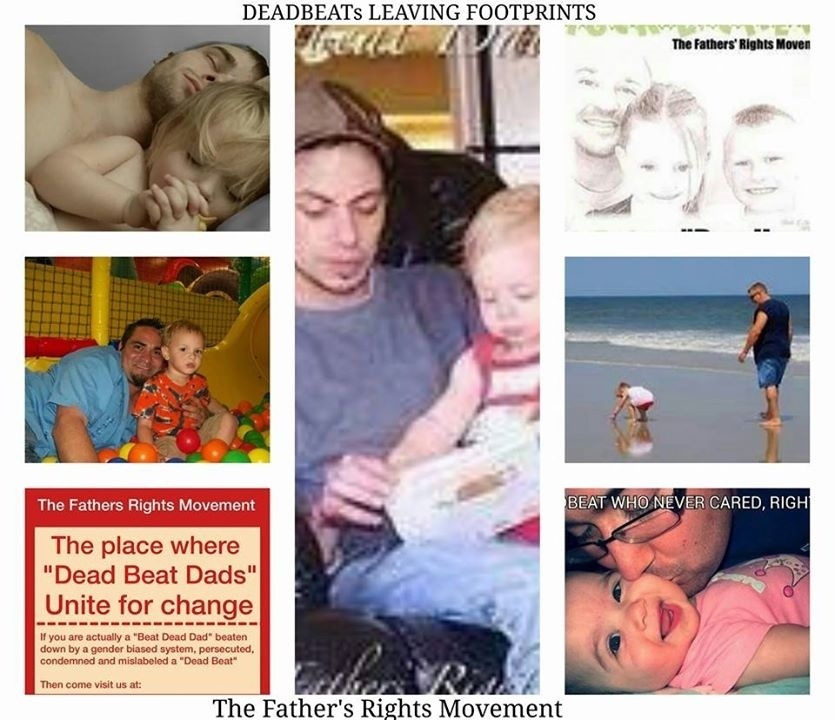
One more Deadbeat Dads update !

Malicious Mother Syndrome , a good read !
DIVORCE RELATED MALICIOUS MOTHER SYNDROME
Ira Daniel Turkat, Ph.D.
With the increasing commonality of divorce involving children, a pattern of abnormal behaviour has emerged that has received little attention. The present paper defines the Divorce Related Malicious Mother Syndrome. Specific nosologic criteria are provided with abundant clinical examples. Given the lack of scientific data available on the disorder, issues of classification, etiology, treatment, and prevention appear ripe for investigation.
INTRODUCTION
A divorced man gains custody of his children and his ex-wife burns down his home. A woman in a custody battle buys a cat for her offspring because her divorcing husband is highly allergic to cats. A mother forces her children to sleep in a car to “prove” their father has bankrupted them. These actions illustrate a pattern of abnormal behavior that has emerged as the divorce rate involving children has grown.
Today, half of all marriages will end in divorce (Beal and Hochman, 1991). The number of children involved in divorce has grown dramatically (e.g., Hetherington and Arastah, 1988) as well. While the majority of such cases are “settled” from a legal perspective, outside the courtroom the battle continues.
The media has spent considerable effort raising public awareness about the problem posed by divorced fathers who do not provide court ordered child support payments. Hedges (1991) has noted that less than 20% of divorced fathers provide child support payments three years after their divorce. Research on the decline of women’s economic status following divorce (e.g., Hernandez, 1988; Laosa, 1988) has contributed to recent legislation to address the “Deadbeat Dad” problem.
While the media correctly portrays the difficulties imposed upon women and children by the “Deadbeat Dad” phenomenon, the cameras have yet to capture the warfare waged by a select group of mothers against child support paying, law abiding fathers. Every day, attorneys and therapists are exposed to horror stories in which vicious behaviors are lodged against innocent fathers and children. Unfortunately, there are no scientific data on the subject. Similarly, the clinical literature has relatively ignored the problem.
A notable exception can be found in the clinical writings of Gardner (1987, 1989) who has provided excellent descriptions of the Parental Alienation Syndrome. Here, a custodial parent successfully engages in a variety of maneuvers to alienate the child from the non-residential parent. Once successfully manipulated, the child becomes “…preoccupied with deprecation and criticism of a parent-denigration that is unjustified and/or exaggerated” (Gardner, 1989 p. 226). In the typical case of Parental Alienation Syndrome, both mother and child engage in an array of abnormal actions against the rather. Gardner views “brainwashing” as a concept “too narrow” (Gardner, 1989) to capture the psychological manipulation involved in turning a child against his/her non-residential parent.
While Gardner’s pioneering descriptions of the Parental Alienation Syndrome provide an important contribution to our understanding of divorce related child involved hostilities, the present paper is concerned with a more global abnormality. As noted in the examples provided in the beginning of this manuscript, serious attacks on divorcing husbands take place which are beyond merely manipulating the children. Further, these actions include a willingness by some mothers to violate societal law. Finally, there are mothers who persistently engage in malicious behaviors designed to alienate their offspring from the father, despite being unable to successfully cause alienation. In sum, these cases do not meet the criteria for Parental Alienation Syndrome. Nevertheless, they portray a serious abnormality.
The purpose of the present paper is to define and illustrate this more global abnormality with the hope of generating increased scientific and clinical investigation of this problem.
DEFINITION
The present section provides a beginning definition of the Divorce Related Malicious Mother Syndrome, which has been derived from clinical and legal cases. As in all initial proposals, it is anticipated that future research will lead to greater refinement in the taxonomic criteria. The proposed definition encompasses four major criteria, as follows:
A mother who unjustifiably punishes her divorcing or divorced husband by:
Attempting to alienate their mutual child(ren) from the father
Involving others in malicious actions against the father
Engaging in excessive litigation
The mother specifically attempts to deny her child(ren):
Regular uninterrupted visitation with the father
Uninhibited telephone access to the father
paternal participation in the child(ren)’s school life and extra-curricular activities
Tile pattern is pervasive and includes malicious acts towards the husband including:
Lying to the children
Lying to others
Violations of law
The disorder is not specifically due to another mental disorder although a separate mental disorder may co-exist.
CLINICAL ILLUSTRATIONS
In this section, I will provide clinical illustrations for each criterion using the reference numbers provided above. As criteria 1-3 are behavior specific to the Malicious Mother Syndrome, I will provide a series of clinical examples. The fourth criterion which addresses the relationship of the proposed syndrome to other mental disorders, will be discussed more generally.
Criterion 1A: Alienating the Children
The range of actions taken by a mother to attempt to alienate her children from their father is impressive. For example:
One mother lied to her children that she could no longer buy food because their father had spent all of their money on women at topless bars.
A doctor’s wife forced her 10 year old son to apply for federally funded free school lunches to delude the boy that his “daddy has made us poor.”
A woman who for years was very close to the children in a custody battle, was asked by their mother to give up neutrality and join her campaign against the father to “dance on his grave.” When the friend refused to give up her neutrality, the mother falsely informed her children that their father was having an affair with this woman.
These behaviors, if successful, could lead a child to not only hate the father but perhaps go years without seeing him. As Cartwright (1993) has noted: “The goal of the alienator is crystalline: to deprive the lost parent, not only of the child’s time, but of the time of childhood” (p. 210).
Criterion 1B: Involving Others in Malicious Actions
The second component of the first major criterion where the mother attempts to punish the husband, involves manipulating other individuals to engage in malicious acts against the father. Examples of this kind are as follows:
During a custody battle, a mother lied to a therapist about the father’s behaviour. The therapist, having never spoken with the father, appeared as an “expert” witness to inform the Judge that the mother should be the primary residential parent and that the father needed to be in therapy.
One angry mother manipulated teenagers to leave anonymous threatening notes at the ex-husband’s home.
A mother who had lost legal custody of her child, manipulated a secretary at the child’s school to assist in kidnapping the child.
In the above examples, it is important to note that the person manipulated by the angry mother has, in a way, been “alienated” against the divorcing husband. Typically, the individual “duped” takes on a righteous indignation, contributing to a rewarding climate for the mother initiating malicious actions.
Criterion 1C: Excessive Litigation
There is little question that either party in a divorce or custody proceeding is entitled to appropriate legal representation and action. Individuals suffering from Divorce Related Malicious Mother Syndrome, however, attempt to punish the divorcing husband by engaging in excessive litigation.
A belligerent and unreasonable mother verbally attacked her ex-husband whenever she saw him. Over time, his response was to ignore her. She then took him to court, asking the judge to require the ex-husband to talk with her.
One mother told a judge that her daughter was not really her divorcing husband’s child.
One woman refused to stop attacking her ex-husband through the courts despite numerous attorneys being fired or voluntarily leaving the case. Over a three year period, seven different attorneys were utilized.
Data exist which can help in determining the range of excessive litigation. For example, Keel et al. (1988) report on the frequency of post-divorce litigation in a sample of 700 families. Their data indicate that only 12.7% of families file one post-divorce petition to the court, whereas less than 5% file two or more petitions (Keel at al. 1988); less than 1% file four or more petitions.
Criterion 2A: Denying Regular Visitation
Experts are in relative agreement that regular and uninterrupted visitation with the non-residential parent is desirable and beneficial for children, except in extreme circumstances (Hedges, 1991). In fact, some states, such as Florida, have laws written to reflect this view (Keane, 1990). Unfortunately, even when the father and children have legal rights to visitation, individuals with Divorce Related Malicious Mother Syndrome continue to interfere with it.
A mother who previously attacked her ex-husband physically during visitation transfers of the children, refused to provide the children when the ex-husband had the police attend to monitor exchanges.
When one divorced father arrived to pick up his children for visitation, the mother arranged for her and the children to be elsewhere so that the father could not visit with the children.
One mother had her physically intimidating boyfriend assault her ex-husband when he came to pick up his children for visitation.
The President of The Council for Children’s Rights (Washington, D.C.) notes that such alienation is considered a form of child abuse (Levy, 1992). Unfortunately, the police typically avoid involving themselves in such situations. Furthermore, unless a victimized father is financially capable of returning to court on an ongoing basis, there is little that can be done to prevent such mothers’ behavior. Finally, even when such cases are brought to trial, the courts are often inadequate in supporting fathers’ visitation rights (Commission on Gender Bias in the Judicial System, 1992).
Criterion 2B: Denying Uninhibited Telephone Access
Given the physical absence of one parent, the telephone plays an important role in maintaining the bond between child and non-residential parent. Individuals suffering from Divorce Related Malicious Mother Syndrome engage in an array of actions designed to circumvent telephone access.
A father called to speak to his children and was told that they were not at home when in bet he could hear their voices in the background.
When one father called to speak with his children, the mother put him on “hold,” informed no one, and then left him there.
Knowing that the children’s father was away on vacation, one mother encouraged them to leave several messages on his answering machine to call back immediately only if he would like some additional visitation time with his children.
Some fathers find the alienation attempts so painful and fruitless that they eventually are extinguished from calling their children; they simply “give up.” Placed in a no-win scenario, the father’s “abandonment” (Hedges, 1991) unfortunately achieves the precise result aimed for by the individual suffering from Divorce Related Malicious Mother Syndrome.
Criterion 2C: Denying Participation in Extra-Curricular Activities
An integral part of the process of maintaining one’s bond with one’s child is to participate in activities that one did before the parents separated. School plays, team sports, and religious events are just some of the types of activities of importance. Malicious Mothers frequently engage in maneuvers designed to prevent participation in these activities.
One father was deliberately given the wrong date and time for an important event for the child. The child was asked by the mother, “I wonder why your father didn’t want to come to see you today”?
One mother refused to provide the father with any information about any extra-curricular activities in which the children were engaged.
Prior to a child’s soccer game, one mother told many of the team parents disparaging falsehoods about the visiting lather. When he came to watch his son’s soccer game, many of these parents looked at him with angry eyes, refused to talk with him, and walked away when he moved toward them.
Malicious Mothers who engage in such behaviors rarely have to face penalties for such actions. Judges, attorneys, and policemen cannot involve themselves in every instance of blocked paternal access. Furthermore, most fathers cannot afford the financial requirements involved. As such, the cycle of access interference perpetuates itself.
Criterion 3A: Malicious Lying to the Children
Given their developmental status, children in a disputed divorce situation are quite vulnerable. When one parent decides to attack the other by lying to the children, examples of this type of malicious behavior may include some of the following.
One divorcing mother told her very young daughter that her father was “not really” her father even though he was.
An eight year old girl was forced by her mother to hand unpaid bills to her lather when he visited because the mother had falsely told the daughter that the father had not provided any economic means of support to the family.
One mother falsely told her children that their father had repeatedly beat her up in the past.
These examples of malicious lying can be contrasted with the more subtle maneuvers typically seen in Parental Alienation Syndrome, such as “virtual allegations” (Cartwright, 1993). Here, the mother setting up a Parental Alienation Syndrome may hint that abuse may have occurred, whereas the individual suffering from Divorce Related Malicious Mother Syndrome falsely claims that abuse has actually occurred.
Criterion 3B: Malicious Lying to Others
Individuals suffering from Divorce Related Malicious Mother Syndrome may engage a wide range of other individuals in their attacks upon the ex-husband. However, with this particular criterion, the individual with Divorce Related Malicious Mother Syndrome specifically lies to other individuals in the belligerency against the father. Some examples include the following.
One furious mother called the president of the (1500 employee) workplace of her divorcing husband, claiming falsely that he was using business property for personal gain and was abusing their mutual children at his work locale.
One woman falsely told slate officials that her ex-husband was sexually abusing their daughter. The child was immediately taken away from him and his access to her was denied.
During the course of a custody dispute, one mother falsely informed the guardian, who was investigating the parenting skills of each parent, that the father had physically abused her.
Snyder (1986) has reported on the difficulty imposed upon legal authorities when confronted with someone who is an excellent liar. Consistent with research on the inability of “specialists” to detect lying (Ekman and O’Sullivan, 1991), a skilled fabricator can be a compelling witness in the courtroom (Snyder, 1986). While sometimes seen in borderline personalities, Snyder (1986) notes that pathological lying (Pseudologia Fantastica) is not restricted to that particular character disorder.
Criterion 3C: Violating Law to Attack the Husband
Individuals suffering from Divorce Related Malicious Mother Syndrome have few if any boundaries in their campaign against the divorcing husband. Violations of law are common in many cases, although the laws broken may be relatively minor. However, in some cases, the violations of law may be quite serious.
One woman deliberately drove her automobile into the house of her ex-husband where their mutual children resided.
In the midst of a custody battle, one woman broke into the residence of her divorcing husband and stole important business papers.
An angry divorcing mother called a Christian evangelical television station and pledged $1000, giving the name, address, and phone number of her divorcing Jewish husband as the pledgee.
The above descriptions may remind the reader of certain personality disorders (e.g., antisocial, borderline, sadistic) but these behaviors may be demonstrated by individuals with Divorce Related Malicious Mother Syndrome who do not appear to meet official diagnostic criteria for an Axis II disorder. Further, in each of the four examples provided above, none of the Malicious Mothers involved was sentenced for such behavior by a Judge.
Criterion 4: Not Due to Another Disorder
In assessing the Divorce Related Malicious Mother Syndrome, it is important to note that many of the above clinical examples seem to have occurred in individuals who had no prior mental disorder diagnosis or treatment. In fact, one mother who engaged in extreme maliciousness toward her divorcing husband had several mental health professionals testify that she was not suffering from any type of mental disorder. Clearly, it would seem that individuals who have Divorce Related Malicious Mother Syndrome may or may not have a concomitant mental disorder.
In the author’s experience, for each mental disorder that might come to mind to account for some of this behavior, an exceptional case presents. For example, in some cases an Adjustment Disorder might seem an appropriate diagnosis, yet one woman still denied her ex-husband visitation 10 years after the divorce. Other cases might suggest a possibility of a personality disorder diagnosis, yet one woman who repeatedly violated the law in attacking her ex-husband, received no personality disorder diagnosis despite being evaluated by masters level and doctoral level examiners. In some instances, Intermittent Explosive Disorder might be considered, yet the anger for many of the mothers does not appear to be intermittent.
Finally, the reader should appreciate that while diagnostic accuracy for certain psychiatric difficulties is not as good as one would like (e.g., the personality disorders, see Turkat, 1990), the problem is compounded in family law where incompetent mental health examiners sometimes become involved in the judicial process (Turkat, 195)3). Clearly, the relationship between Divorce Related Malicious Mother Syndrome and other mental disorders is a complex one which requires significant investigation.
DISCUSSION
The above description of the Divorce Related Malicious Mother Syndrome raises a variety of important clinical, legal, and scientific issues.
From a clinical perspective, families that involve a Divorce Related Malicious Mother Syndrome are subject to serious episodes of stress and distress. Yet, there is no scientific evidence on how to treat this phenomenon. It is particularly compromised by the fact that many of these cases that appear to meet the proposed diagnostic criteria deny that there is anything wrong with them.
An additional difficulty is that many therapists are unaware of this pattern of malicious behavior (Heinz and Heinz, 1993). As such, there are therapists who are “fooled” by such cases and, as noted earlier, will come to court testifying that there is nothing wrong with the mother involved.
From a legal perspective, there are some attorneys who may unintentionally encourage this type of behavior (Gardner, 1989). On the other hand, there are some attorneys who deliberately encourage such behavior, as the financial rewards for them are time dependent. In other words, the more involved the litigation process, the greater the profits for the attorney (Grotman and Thomas, 1990). However, even for the subset of attorneys for whom this may be true, there is a point of diminishing returns. Furthermore, independent of economic considerations, many who become involved with family law courtrooms find that these types of cases are not handled well (Greif, 1985; Levy, 1992).
The woman who is not disturbed “enough” to lose custody of her children in the courtroom will not have money denied to her because she engages in this behavior; nor will she go to jail. Thus, many clients report significant frustration when they and their children are exposed to this type of behavior, and the courts seem to do little if anything about.
In a review of pertinent law literature on bias against men in family law proceedings, Tillitski (1992) concluded that there is widespread discrimination. This is well illustrated by one family law Judge’s statement that, “I ain’t never seen the calves follow the bulls, they always follow the cow; therefore, I always give custody to the mamas” (Commission on Gender Bias in the Judicial System, 1992 p. 742). Similarly, it is noted that visitation rights of fathers are not enforced as rigidly as are child support orders (Commission on Gender Bias in the Judicial System, 1992). Such bias against men in family law proceedings results in a unique group of fathers who unintentionally become relatively helpless victims of the system (Tillitski, 1992). This situation would seem to reinforce much of the vicious behavior displayed by women suffering from Divorce Related Malicious Mother Syndrome.
The issue of sex distribution of the disorder certainly needs to be addressed. The overwhelming majority of custodial parents are female (Commission on Gender Bias in the Judicial System, 1992). Gardner (1989) has noted that Parental Alienation Syndrome appears most commonly in females, although it is possible for a male who has custody of the children to engage in the same type of alienating behaviors. The author’s experience with Divorce Related Malicious Mother Syndrome is similar to Gardner’s. However, the present writer has yet to see a case of a father engaging in all of the criteria listed. This does not mean that it is not possible for there to be a “Malicious Father” Syndrome. In fact, Shepard (1992) reports that there is significant abuse of some custodial mothers by non-residential fathers. On the other hand, it should be noted that there are females who are required to pay chiltl support, but we have yet to heara about “Deadbeat Moms.” Given at the present time that a case in which the father met all of the criteria for Divorce Related Malicious Mother Syntlrome has yet to be documented, it appears advisable to await scientific evidence to guide issues of nosologic labeling.
How prevalent is the Divorce Related Malicious Mother Syndrome? The answer is unknown. Gardner (1989) reports that approximately 90% of all custody battles involve some aspects of parental alienation. Further, Kressel (1985) reviewed data indicating that up to 40% of maternal custodians denied visitation to the ex-husband in order to punish him. Relatedly, Arditti (1992) reported that 50% of a sample of divorced fathers (N = 125) indicated that visitation was interfered with by the mother. While aspects of parental alienation may be common, it is highly unlikely that such a percentage of maternal custodians would meet all of the criteria for Divorce Related Malicious Mother Syndrome.
In regard to incidence, it would appear through the title of this syndrome that the malicious behavior is precipitated by the divorce process.
However, this is clearly an empirical question. While the malicious actions may first be noted during a divorce process, it is possible that maliciousness may have been present earlier but undetected. Research on pre-divorce parental conflict (Enos and Handal, 1986) supports this speculation. Relatedly, it may also be that there are some cases of pre-existing mental disorder that have not been discovered until the stress of the divorce itself unfolds.
Finally, it should be noted that research on the nature of post-divorce family functioning is beginning to emerge. Some data exist on the role of parental conflict in children’s postdivorce functioning (e.g., Frost and Pakiz, 1990; Furstenberg et al., 1987; Healy, Malley and Stewart, 1990; Kudek, 1988), but studies have yet to appear on the more extreme cases of Parental Alienation Syndrome and Divorce Related Malicious Mother Syndrome.
The Divorce Related Malicious Mother Syndrome represents an important societal phenomenon. The disorder affects children, parents, attorneys, judges, guardians, mental health professionals, and others. Until this phenomenon is explored more thoroughly in the scientific and clinical literature, the problems imposed by individuals suffering from Divorce Related Malicious Mother Syndrome will continue to plague us. Hopefully, the present manuscript will stimulate research so that clinical and legal management guidelines can be developed.
REFERENCES
Artlitli, J. A. (1992). Factors related to custody, visitation, and child support for divorced fathers: An exploratory analysis. J. Div. Remarr. 17: 23-42.
Beal, E. W., and Hockman, D. (1991). Adult Children of Divorce, Delacorte Press, New York.
Cartwright, D. F. (1993), Expanding the parameters of parental alienation syndrome. Am. J. Fam. Ther. 21: 205-215.
Commission on Gender Bias in the Judicial System. (1992). Gender and justice in the courts: A report to the supreme court of Georgia. Georgia State Univ. Law Rev. 8: 539-807.
Ekman, P., and O’Sullivan, M. (1991). Who can catch a liar? American Psychologist, 46: 913-920.
Enos, D. M., and Handal, P. J. (1986). The relation of parental marital status and perceived family conflict to adjustment in white adolescents. J. Consult. Clin. Psychol. 54: 820-824.
Frost, A. K., and Pakiz, U. (1990). The effects of marital disruption on adolescence: Time as a dynamic. Am. J. Orthopsychiatry 60: 544-555.
Furstenberg, F. F., Morgan, S. P., and Allison, P. D. (1987). Paternal participation and children’s well being after marital dissolution. Am. Sociological Rev. 52: 695-701.
Gardner, R. A. (1987). The Parental Alienation Syndrome and the Differentiation Between Fabricated and Genuine Child Sex Abuse, Creative Therapeutics, Cresskill, NJ.
Gardner, R. A. (1989). Family Evaluation in Child Custody Mediation, Arbitration, and Litigation, Creative Therapeutics, Cresskill, NJ.
Greif, G. L. (1985). Single Fathers, Lexington Books, Lexington, MA.
Grutman, R., and Thomas, B. (1990). Lawyers and Thieves. Simon & Schuster, Englewood Cliffs, NJ.
Healy, J. M., Malley, J. E., and Stewart, A. J. (1900). Children and their fathers after parental separation. Am. J. Orthopsychiatry 60: 531-543.
Hetherington, E. N., and Arasteh, J. D. (eds.). (1988). Impact of Divorce, Single Parenting and Step-Parenting on Children, Lawrence Erlbaum, Hillsdale, NJ.
Heinz, H. R., and Heinz, S. A. (1993). Emotional incest: The tragedy of divorcing families. Am. J. Fam. Law 7: 169-174.
Hernandez, D. J. (1988). The demographics of divorce and remarriage. In Hetherington, E. M., and Arasteh, J. D. (eds.), Impact of Divorce, Single Parenting, and Step-Parenting on Children, Lawrence Erlbaum, Hillsdale, NJ, pp. 3-22.
Hodges, W. E (1991). Interventions for Children of Divorce, (second edition), Wiley, New York.
Keane, G. (1990). Florida Divorce Handbook, Pineapple Press, Sarasota, FL.
Koel, A., Clark, S. C., Phear, W. P., and Hauser, B. B. (1988). A comparison of joint and sole legal custody agreements. In Hetherington, E. M., and Arasteh, J. D. (eds.), Impact of Divorce, Single Parenting, and Step-Parenting on Children, Lawrence Erlbaum, Hillsdale, NJ, pp. 73-90.
Kressel, K. (1985). The Process of Divorce, Basic Books, New York.
Kurdek, L. (1988). Custodial mothers’ perceptions of visitation and payment of child support by non-custodial fathers in families with low and high levels of pre-separation interparental conflict. J. Appl. Devel. Psychol. 9: 315-328.
Laosa, L. N. (1988). Ethnicity and single parenting in the United Stales. In Hetherington, E. M., and Arasteh, J. D. (eds.), Impact of Divorce, Single Parenting, and Step-Parenting on Children, Lawrence Erlbaum, Hillsdale, NJ, pp. 23-49.
Shepard, N. (1992). Child-visiting and domestic abuse. Child Welfare 71: 357-367.
Snyder, S. (1986). Pseudologia Fantastica in the borderline patient. Am. J. Psychiatry 143: 1287-1289.
Tillitski C. J. (1992). Fathers and child custody: Issues, trends, and implications for counseling. J. Ment. Health Counsel. 14: 351-361.
Turkat I. D. (1990). The Personality Disorders: A Psychological Approach to Clinical Management, Pergamon, New York.
Turkal, I. D. (1993). Questioning the mental health expert’s custody report. Am. J. Fam. Law 7: 175-179.
Ira Daniel Turkat, Florida Institute of Psychology and University of Florida College of Medicine,
1225 Avenida Del Circo, Venice, Florida 34285.
 The Story of my Twin Boys Oliver and Oscar Ferreira
You must be logged in to post a comment.